Source Off Road Rear Door Ladder for Roof Access, Cargo Loading, and Rescue
Compare 30 verified off road rear door ladder options from Chinese manufacturers. Buyers can evaluate specifications, materials like aluminum and steel, and customization features for Tank 300 and similar vehicles.
Key considerations
Products List
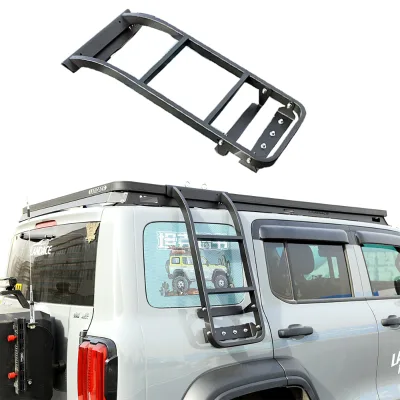


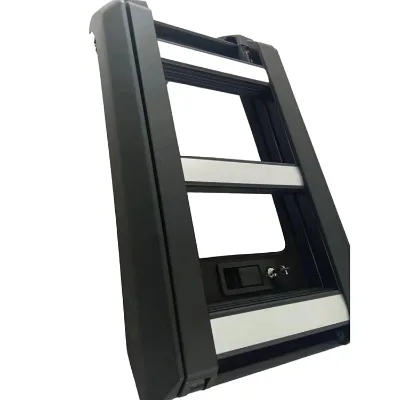
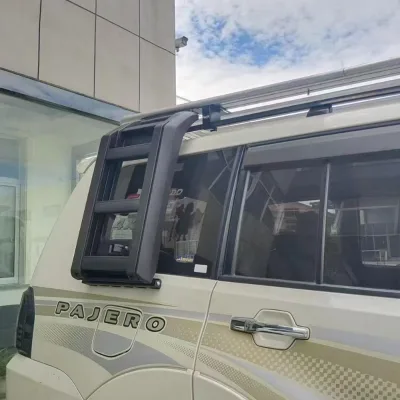


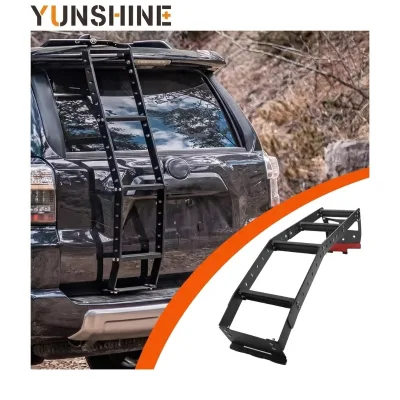


Comprehensive Sourcing Guide
Strategic Sourcing Guide for Off-Road Rear Door Ladders
Procuring off-road rear door ladders requires a disciplined approach that balances rugged utility with precise vehicle compatibility. The market for these accessories is fragmented, with products ranging from universal aluminum units to model-specific steel assemblies. Buyers must navigate a landscape where product attributes often vary significantly between listings, even when sharing similar core functions. This guide synthesizes observed market data and technical requirements to provide a framework for evaluating suppliers and selecting the right equipment for fleet or personal off-road applications.
Technical Specifications and Material Composition
The foundational decision in sourcing a rear door ladder involves the material composition and dimensional specifications. Observed product data indicates a divergence in material choices, with listings citing both Aluminum and Steel as primary construction materials. Aluminum variants, such as those noted for specific tank model fitments, often emphasize weight reduction while maintaining structural integrity, with single unit weights observed around 11kg to 12kg depending on the configuration. In contrast, other market segments highlight Steel and Iron bracket materials, which may offer higher load-bearing capacity at the expense of added mass.
Dimensional consistency is critical for integration with vehicle roof racks or tailgate mechanisms. Product sizes in the current market range from compact folding units measuring approximately 840mm in length to larger assemblies with package dimensions reaching 100x50x20 cm. Buyers must verify the "Product Size" against their vehicle's specific mounting points. For instance, a ladder designed for the "Tank 300" model may have a specific footprint of 840400320mm, whereas universal models might offer different profiles. The "Single Gross Weight" is another vital metric; observed values range from 0.7kg for smaller foldable holders to 12kg for full-size climbing ladders. This variance directly impacts the vehicle's center of gravity and roof load limits.
Furthermore, the functional design dictates the ladder's utility. Attributes such as "Foldable Holder" and "Climbing to Car Roof" suggest mechanisms that allow for compact storage when not in use. The "Placement" is typically defined as "Roof Mount" or "Exterior," requiring secure attachment points. The "Surface Finishing" process, often described as "Finished," is essential for corrosion resistance, particularly for off-road environments where exposure to mud, water, and road salts is common.
Compliance, Certification, and Safety Standards
In the B2B procurement of automotive accessories, verifying compliance and certification is non-negotiable. The supply chain for off-road ladders includes products bearing various certifications, including ISO, RoHS, and ISO9001. These standards indicate that the manufacturer adheres to specific quality management systems (ISO9001) and environmental restrictions on hazardous substances (RoHS). However, buyers must treat these certifications as observations of specific listings rather than universal guarantees for all products in the category.
Safety ratings also play a pivotal role in selection. Some product listings explicitly mention a "Security Rating: A," suggesting a standardized assessment of the product's stability and load-bearing safety. When evaluating a supplier, procurement teams should request documentation proving that the specific model number, such as "CK-JP-005" or "YZ587," has undergone the testing protocols associated with these ratings. The absence of a stated security rating or certification in a product description should trigger a deeper inquiry into the manufacturer's quality assurance processes.
Additionally, the "Standard" field in product data often references specific vehicle models, such as "Jeep Wrangler Foldable Pedal." This indicates that some products are designed to meet the specific engineering standards of established vehicle platforms. For custom or universal applications, buyers should verify if the product meets general automotive safety standards rather than relying solely on model-specific references. The "Warranty" period, observed as 12 months in some listings, serves as a proxy for the manufacturer's confidence in their product's durability and compliance with safety expectations.
Cost Drivers and Pricing Dynamics
Understanding the cost structure of off-road rear door ladders is essential for budgeting and supplier negotiation. The observed price range in the market spans from 1 to 500 USD, a wide variance that reflects differences in material quality, manufacturing complexity, and brand positioning. Several factors drive these costs. First, the material choice is a primary determinant; aluminum units often command a premium over steel or iron-based alternatives due to the cost of raw materials and the complexity of forming lightweight structures.
Second, the level of customization significantly impacts pricing. Listings indicating "Customization: Available" or "Customized: Non-Customized" suggest that bespoke manufacturing processes, such as specific mounting brackets or color finishes (Black, Red, Silver, Blue, Yellow, Green), incur additional costs. Standardized, off-the-shelf units typically fall on the lower end of the price spectrum, while tailored solutions for specific vehicle models like the "Tank 400" or "Tank 300" may approach the higher limits of the observed range.
Third, packaging and logistics influence the final landed cost. The "Package" type, whether "1set/carton" or "Crate+Carton," affects shipping efficiency. Larger single package sizes, such as 100x50x20 cm, increase volumetric weight, which can raise freight expenses. Buyers should analyze the "Selling Units" and "MOQ" (Minimum Order Quantity) to optimize their order volume. While some suppliers list an MOQ of 5 sets, others may allow for single-item purchases, which affects the unit price through economies of scale.
Typical Applications and Vehicle Fitment
The primary application for off-road rear door ladders is facilitating access to roof-mounted cargo, such as roof tents, storage boxes, or spare tires. The "Function" attribute, described as "Climbing to Car Roof," confirms this utility. However, the "Usage" field varies between "Universal" and model-specific fitments. Universal ladders offer flexibility for mixed fleets but may require additional adapters or custom mounting solutions. Model-specific ladders, such as those explicitly listed for "Tank 300" or "Tank 400," are engineered to align perfectly with factory mounting points, ensuring a secure fit without modification.
The "Car Fitment" and "Fit for" attributes are critical for avoiding compatibility issues. A ladder designed for a specific chassis may not fit a different vehicle, even if the dimensions appear similar. Buyers must cross-reference the "Model Number" and "Car Models" fields with their vehicle inventory. For example, a product with the model number "C044" might be intended for a specific regional market or vehicle platform, distinct from the "YZ587" model.
Installation ease is another application factor. Attributes like "Easy Installation" and "Easy" advantage suggest that the product is designed for quick deployment by field crews or individual users. This is particularly relevant for off-road expeditions where time and tool availability are limited. The "Special Function" of being a "Foldable Holder" further enhances its utility in scenarios where space is at a premium, allowing the ladder to be stowed flush against the vehicle when not in use.
Supplier Evaluation and Geographic Considerations
Evaluating suppliers requires a careful review of their geographic origin and production capabilities. The "Place of Origin" for observed products includes regions such as Shandong, Jiangsu, and Anhui in China. These regions are known for their manufacturing clusters, but buyers should verify the specific factory capabilities rather than assuming uniform quality across a province. The "Brand Name" field, such as "Landace," provides a point of reference for brand reputation, though buyers should not rely on brand names alone without verifying the underlying manufacturing standards.
When assessing a supplier, procurement teams should examine the "Product Name" and "Product Model" consistency. A supplier offering a wide range of model numbers, from "CK-JP-005" to "YZ587," may have a diverse production line capable of handling various specifications. However, this diversity can also indicate a trading company rather than a direct manufacturer. Buyers should request evidence of direct manufacturing, such as factory audits or production line photos, to ensure the supplier can maintain quality control.
The "Features" attribute, such as "Make Directly," suggests a manufacturer capable of in-house production. This is a positive indicator for supply chain stability and the ability to handle customization requests. Additionally, the "Customization" availability should be confirmed with the supplier to ensure they can accommodate specific branding or design changes. The "Single package size" and "prod_packing" details also provide insight into the supplier's logistics capabilities; consistent packaging suggests a mature supply chain.
Quality Control and Long-Term Procurement Strategies
Implementing a robust quality control (QC) strategy is vital for mitigating risks associated with off-road equipment. The "Process" and "Surface Finishing" attributes indicate the level of care taken in manufacturing. Buyers should verify that the "Finished" surface treatment includes anti-corrosion measures suitable for harsh environments. The "Security Rating" and "Warranty" terms serve as indicators of the supplier's confidence in their QC processes. A 12-month warranty is a baseline expectation; longer terms may indicate superior quality but require careful review of the terms and conditions.
Long-term procurement considerations involve establishing a relationship with suppliers who can provide consistent quality and support. The "Certification" status, including ISO and RoHS, should be validated periodically to ensure ongoing compliance. Buyers should also monitor the "Lead Time" and "MOQ" flexibility to adapt to changing demand. For example, an MOQ of 5 sets allows for smaller initial orders, reducing inventory risk, while larger orders may secure better pricing.
Finally, the "Position" of the product as "Exterior" means it is subject to wear and tear. Buyers should plan for replacement cycles and ensure that the supplier can provide spare parts or replacement units. The "Sound Insulation" attribute, noted as "Style:Classic," may seem irrelevant to ladders but could indicate a broader product line or a specific design philosophy that prioritizes aesthetics alongside function. By focusing on these tangible attributes and verifying them against actual product samples, buyers can build a resilient supply chain for off-road rear door ladders that meets both technical and operational requirements.
FAQs
What materials are used for off road rear door ladders?
Products are constructed from aluminum, steel, or iron brackets. Aluminum variants offer lighter weight around 11kg, while steel options provide higher load capacity. Buyers must verify the specific material listed for each model number to ensure compatibility with their vehicle.
Which certifications should I look for in a ladder supplier?
Look for ISO, RoHS, and ISO9001 certifications on product listings. These indicate adherence to quality management and environmental standards. However, treat these as observations of specific listings rather than universal guarantees for all products in the category.
How much does an off road rear door ladder cost?
The observed price range spans from 1 to 500 USD. Costs vary based on material choice, customization levels, and packaging dimensions. Aluminum units often command a premium over steel alternatives due to raw material costs and manufacturing complexity.
Can I customize the color of the ladder?
Customization is available for some listings, with colors including black, red, silver, blue, yellow, and green. Standard units may have limited options, while bespoke manufacturing processes for specific vehicle models like the Tank 300 may incur additional costs.
What is the minimum order quantity for these ladders?
The observed MOQ ranges from 1 to 500 sets, with some suppliers listing 5 sets as a standard minimum. Buyers should analyze selling units and MOQ flexibility to optimize order volume and secure better pricing through economies of scale.
Where are these ladders manufactured?
Products originate from regions in China including Shandong, Jiangsu, and Anhui. Buyers should verify specific factory capabilities rather than assuming uniform quality across a province. The brand name Landace is one example of a supplier found in this market.
How do I ensure the ladder fits my vehicle?
Check the car fitment and model number fields against your vehicle inventory. Specific models like Tank 300 or Tank 400 require exact dimensions, such as 840*400*320mm. Universal models offer flexibility but may need additional adapters for a secure fit.